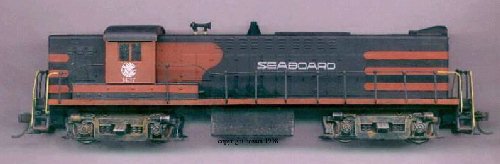
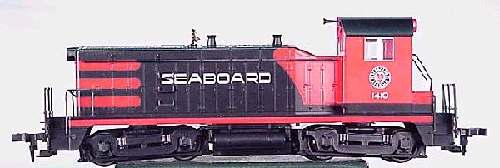
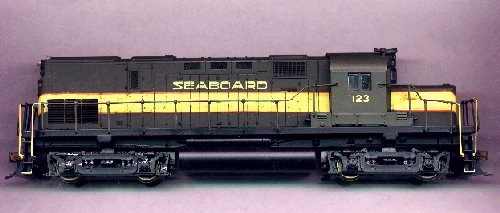
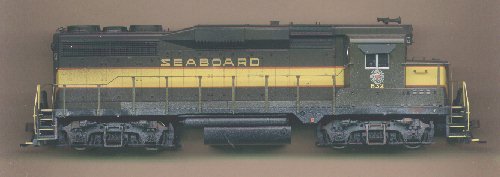
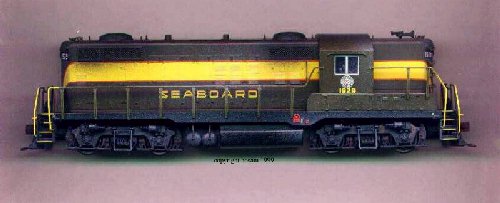
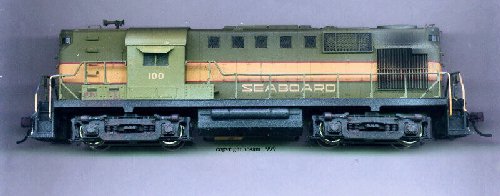
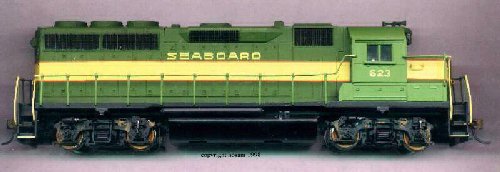
SEABOARD AIRLINE RAILROAD
RICHMOND, VA.A combination of the, Seaboard Airline, Gainesville Midland and Tavares & Gulf railroad companies 9632 miles of track.
In 1967 merged with the ACL to form the Seaboard Coast Line. For more information see: Seaboard by Withers Publishing. D Blakes SAL site [AOL member pages were discontinued and this link is no longer active.] W Calloway's SAL site**DIESEL PICTURES**
**CABOOSE PICTURES** PAINT SCHEMES & MIXES
SEABOARD AIR LINE Red & Black Red-Caboose red #414128 Black-Engine black #414110 Decals-MS #87-152(switchers early) decals-MS#87-565 (switchers late)SEABOARD AIR LINE Citrus colors Green-Pullman Green # 414284 Yellow-Reefer yellow #414122 add 1/4 cap reefer white #414113 Orange-GN orange #414224 Silver-Bright Silver #501998 Black-engine black #414110 decals-MS #87-439(E units) SEABOARD AIR LINE/SEABOARD COAST LINE Light green & red Green-Aged White #414131 add 1/8 cap SF blue #414150 Red-Caboose red #414128 decals-MS #87-439(E units) SEABOARD AIR LINE Green & Yellow(Pullman green) Green-Pullman green #414284 Yellow-use Microscale decals or Reefer yellow #414125 add 1/4 cap reefer white #414113 Orange-Reefer orange #414119 decals-MS #87-565(Road switchers and freight units), #87-566(stripes) SEABOARD AIR LINE/SEABOARD COAST LINE Light Green & Yellow (Jolly Green or Lime green) Green-Mix 2 ounces reefer yellow #414125 with 1/2 ounce of SF blue #414150. Yellow-use Microscale decals or Reefer yellow #414125 add 1/4 cap reefer white #414113 decals-MS #87-565(Road switchers and freight units), #87-566(stripes) All color mixes are based on PollyScale Acrylics paint numbers.
All bottle sizes are 1 fluid ounce size.
Capful refers to the cap on the bottle.
HK=Herald King decals for reference only these are no longer available.
MS=Microscale Decals
C=Custom made on Alps PrinterCABOOSE ROSTER
Seaboard, was N&W #518012, Class CF, built 1914, sold 07/45 Seaboard, was N&W #518016, Class CF, built 1914, sold 07/45 Seaboard, was N&W #518046, Class CF, built 1914, sold 07/45 Seaboard, was N&W #518050, Class CF, built 1914, sold 07/45 Seaboard, was N&W #518060, Class CF, built 1914, sold 07/45 Seaboard, was N&W #518064, Class CF, built 1914, sold 07/45 Seaboard, was N&W #518075, Class CF, built 1915, sold 07/45 Seaboard, was N&W #518110, Class CF, built 1914, sold 07/45 Seaboard, was N&W #518188, Class CF, built 1917, sold 07/45 Seaboard, was N&W #518261, Class CF, built 1918, sold 07/45Interior colors of cabooses
08/25/01 SMRF list While in Atlanta I made a run by Riverdale and came back with a few goodies including the ACL M3 cab kit. That gives me motivation to put it and the SAL cab together at the same time. In spite of the good material in the kit on exterior paint colors I don't remember seeing anything on the interior. Anyone know what colors the insides of the ACL/SAL cabs were? Larry J. Puckett 08/25/01 Odd isn't it, I posted the entire color schemes for the SAL equipment that Warren Calloway furnished some time ago. Interior colors for cabooses weren't included. Interior colors for camp cars were on the list hosam 08/26/01 I think Larry is just trying to rub it in. Most of us are happy if we get the caboose trucks the right color. Next he'll be wanting to know the color of the seat cushions in the cupola. RWBooneSr 08/26/01 For that it is easy. Black. The interiors of most were a very light green. Larry Denton 08/26/01 Seafoarm green is the color. However, were not some of the interiors of the wooden cars a suede gray or beigish color???That is what I have been told. I was also told that the widespread use of seafoam green came along with the steel sided cars. Denis F. BlakeFREIGHT CAR NOTES
Guide to the various paint schemes for Seaboard Airline Freight Cars
Keep in mind that when units began being repainted no exact dates can be determined except the starting dates. Some units remained in the older paint scheme for some time before being repainted whereas some were repainted right away. As always, when custom painting a model, refer to good pictures of the unit for placement of roadname, road numbers, heralds and other lettering details. Pictures also reveal minor variations in these paint schemes due to being done in different repair shops. Pictures also reveal minor variations in the placement of horns, bells, lights and other appliancesSTANDARD PRACTICE FOR PAINTING FREIGHT CARS REVISED JAN 12,1951
SAL freight car painting instructions from November10,1948 PHOSPHATE (DRY ROCK) CARS To be painted with one coat of primer and two coats of standard freight car brown paint except underframes to be given one coat of primer, followed by one coat of car cement. CEMENT CARS Outside of body, including underframe, to be given one coat of metal primer, and then given two coats of Vinyl base DuPont alkali resisting gray paint 1353-762. Lettering and stenciling to be applied with DuPont Du-lux stencil black. WOOD RACK CARS To be painted with one coat of primer and one coat of car cement. FLAT CARS Complete body and underframe, not including woodwork, to be painted with one coat of primer and one coat of car cement. WHEEL RACK CARS Complete body and underframe, not including woodwork, to be painted with one coat of primer and one coat of car cement, except that no paint is to be applied to creosoted flooring or racks where used. CABOOSE CARS Body to be primed and painted with red caboose enamel, DuPont No. 474-853/ Steel roof and underframe to be given one coat of primer, followed by one coat of car cement. Grab irons and hand rails to be painted with yellow synthetic enamel. WORK EQUIPMENT Body, including sides, ends and roofs, to be primed and given two coats of SAL standard Pullman-Green paint, except oil tank cars which are to be painted with locomotive black. Underframe to be given one coat of primer, followed by one coat on car cement. TRUCKS Truck sides and bolsters must not be painted with heavy asphaltic tar or cement base paints; however, such parts may be coated with light bodied paint that will not prevent detection of flaws or cracks in ordinary inspection. Car wheels must not be painted. This was policy until February 7, 1955 when the F-1 was revised. Will list revisions later. Warren Calloway I forgot to revise the subject on my earlier post, hitting the sent too quick. Below is the revised Standard SAL practice for painting freight cars as of February 7, 1955. Comparing this against the earlier, SAL deleted much of the use of the car cement, replacing it with the SAL freight car brown Warren CallowaySTANDARD PRACTICE FOR PAINTING FREIGHT CARS REVISED FEB 7,1955
MATERIALS: Primer: Thrasher No. 2271-A zinc Chromate primer. Paint: Approved standard freight car brown paint. Texaco No. 1401 Liquid car cement: This is a heavy fluid, containing about 15% by weight of re-ground asbastos. It is furnished in 55-gallon non- returnable drums. It dries to a black, glossy surface in approximately eight hours, and becomes dull on weathering. It can be applied with a brush or spray. When sprayed, the temperature should be between 50 degrees and 100 degrees F. with air pressure about 50 pounds. Lettering and stenciling: Pittsburgh Plate Glass Company's "Snolite." GENERAL All metal parts, including underframes, shall be free from scale and rust and thoroughly cleaned by sand blast or wire brush before they are painted. All metal in contact with metal, and where there are not accessible after assembly, must be covered with one coat of Thresher 2271-A primer. On all cars, including freight cars and caboose cars, the place, date, and kind of paint should be stenciled in 1 inch high letters on one end of car near end sill , thus: "Painted - Jax - 10-7-50 - DuPont." BOX CARS (STEEL) Galvanized roofs. To be given one coat of car cement on the outside or top only. Steel Roofs. To be given one coat of primer, followed by one coat of car cement on the outside, and one coat of primer only on the inside. Steel ends: To receive one coat of primer, followed by two coats of SAL brown on the outside, the inside where inside lining is removed to be given one coat of primer, followed by one coat of car cement. Sides. The outside to be given one coat of primer, followed by two coats of standard freight car brown paint. The inside, before installing woodwork, to be given one coat of primer, followed by one coat of car cement. Side doors. The inside to be given one coat of primer, followed by one coat of standard freight car brown paint. The outside to be given one coat of primer, followed by two coat of standard freight car brown. Underframe: To be given one coat of primer, followed by one coat of car cement. BOX CARS AND STOCK CARS (COMPOSITE) To be painted the same as steel cars except wooden sides, ends and doors to be painted with two coats of standard freight car brown paint, SAL body color on all exterior surfaces. GONDOLAS AND HOPPER CARS (STEEL) Outside of car body, including underframe, to be painted with one coat of primer followed by two coats of standard SAL body color. Inside to be given coat of primer at joints and crevices. Underframe to be given one coat of primer, followed by one coat of car cement. PHOSPHATE (WET ROCK) CARS The outside of car body to be given one coat of primer, followed by two coats of standard freight car brown paint, underframe to be given one coat of primer, followed by one coat of car cement. PHOSPHATE (DRY ROCK) CARS To be painted with one coat of primer and two coats of standard freight car brown paint except underframes to be given one coat of primer, followed by one coat of car cement. CEMENT CARS All metal in contact with wood or metal, and where not accessible after assembly, to be given one coat of Thresher 2271-A primer. Outside of body, including underframe, to be given one coat of metal primer, and then given two coats of Vinyl base DuPont alkali resisting gray paint 1353-762. Lettering and stenciling to be applied with DuPont Du-lux stencil black. WOOD RACK CARS To be painted with one coat of primer and two coats of SAL brown paint.. FLAT CARS Complete body and underframe, not including woodwork, to be painted with one coat of primer and two coats of SAL brown paint. WHEEL RACK CARS Body to be painted with one coat of primer and two coats of SAL brown. Underframe to be painted with one coat of primer and one coat of car cement. No paint is to be applied to cresoted flooring or racks where used. CABOOSE CARS Body to be primed and painted with red caboose enamel, DuPont No. 474-853/ Steel roof and underframe to be given one coat of primer, followed by one coat of car cement. Grab irons and hand rails to be painted with yellow synthetic enamel. WORK EQUIPMENT Body, including sides, ends and roofs, to be primed and given two coats of SAL standard Pullman-Green paint, except oil tank cars which are to be painted with locomotive black. Underframe to be given one coat of primer, followed by one coat on car cement. CAMP CAR INTERIOR Ceiling: To be painted with oyster white color paint. Side Walls: To be painted with cream color paint. Floors: To be painted with tan color paint. Trim: To be painted with mahogany brown color paint TRUCKS Truck sides and bolsters must not be painted with heavy asphaltic tar or cement base paints; however, such parts may be coated with light bodied paint that will not prevent detection of flaws or cracks in ordinary inspection. Car wheels must not be painted. Warren CallowaySAL FUEL TANKS
GP7s SAL 1700-1703 1200 gallons SAL 1704-1711 800 water/800 fuel SAL 1712-1743 1200 gallons SAL 1744-1769 800 water/800 fuel SAL 1770-1783 1200 fuel SAL 1784-1822 1600 fuel For those SAL fans. SAL had the following tank sizes: Many SAL with S/G converted to 1600 gallons of fuel when S/G deactivated. GP9s SAL 1900-1925 1600 gallons fuel SAL 1926-1929 1700 gallons fuel SAL 1954-1978 1600 gallons fuel SAL 1979 1700 gallons fuel Warren Calloway© S.A. McCall